


Pu'er's Secrets: Time, Transformation, and the Forest's Bounty
December 28, 2025






Sealed away in ancient warehouses, Pu-erh tea is not merely leaves, but a journey sculpted by time. It draws nourishment from the mountains, transforms with the passage of years, and ultimately presents a unique richness and depth. This article will take you to explore the secrets of Pu-erh tea, and to experience its profound connection with time, nature, and culture.
The Secrets of Pu'er: Time, Transformation, and the Bounty of the Mountains
The Secrets of Pu'er: Time, Transformation, and Gifts from the Mountains
I remember the first time I saw aged Pu-erh tea, it was at the home of an experienced tea connoisseur. He carefully opened an old wooden box, inside of which were stacks of tea cakes wrapped in bamboo leaves. A unique aroma instantly filled the air, carrying the fragrance of earth, the sweetness of herbs, and an indescribable depth. That aroma seemed to carry ancient stories, captivating and irresistible, making you want to explore it further.
Pu'er: A gift from Yunnan
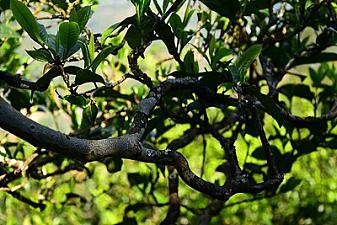
Pu'er tea, originally known as Pu'le, is produced in areas such as Xishuangbanna and Mengla in Yunnan Province. Its name originates from the ancient Pu'er Prefecture, which is now MengHai City and Jinghong City. Unlike the refreshing taste of green tea or the richness of black tea, Pu'er tea's most unique characteristic lies in its "transformation" property. It is a post-fermented tea, also known as aged tea. After the fresh leaves are harvested, they undergo processes such as fixation, rolling, and are made into raw tea. These are then followed by natural composting and piling for fermentation, ultimately forming ripe tea. And in this process, time plays a crucial role.
Green Tea and Black Tea: Two Different Journeys
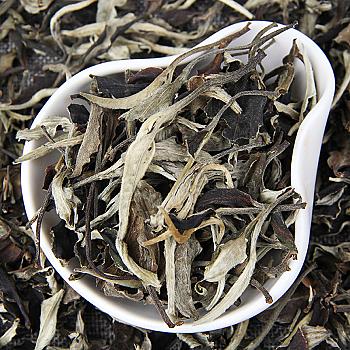
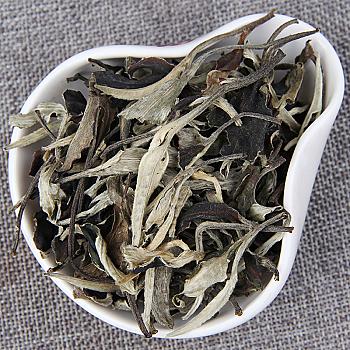
Pu-erh tea is primarily divided into two types: raw tea (sheng cha) and ripe tea (shou cha). Raw tea undergoes no fermentation and retains the natural green color and original flavor of the tea leaves. During storage, it undergoes a series of complex biochemical reactions, producing various substances, and its flavor gradually changes from initial bitterness and astringency to a smoother, sweeter taste with a long, lingering aftertaste. Ripe tea, on the other hand, is produced by adding a microbial fermentation process to raw tea, making it easier to drink and with a smoother texture.
The Artisan's Heart in Tea Making: A Fusion of Time and Craftsmanship
The processing of Pu-erh tea is extremely complex, with each step embodying the dedication of the tea makers. From harvesting to fixing, from rolling to fermentation, every step must be strictly controlled to guarantee the quality of the tea. Especially during the fermentation process, factors such as temperature, humidity, and ventilation will affect the tea's flavor, requiring meticulous adjustments by experienced tea masters.
In ancient times, people would pile finished tea cakes on hillsides or in storage rooms, allowing them to age naturally. Time acted like a magician, imparting more layers and depth to the tea. The flavor differences between tea cakes from different years are significant. Younger teas might be more bitter, but after decades, they develop a mellow sweetness and a lingering aftertaste. Some collectors even consider aged Pu-erh tea as an investment, as the price of prized, aged tea often increases substantially.
Time bestows Pu-erh tea with its unique charm.
Unlike other teas, the charm of Pu-erh lies in its "sense of time." It's not just a cup of tea, but a story shaped by time. A cup of aged Pu-erh seems to transport you through time, allowing you to feel the accumulation of years and the vicissitudes of history.
Imagine, during the Qing Dynasty, an official sent tea cakes back to his hometown. Decades later, his descendants tasted this tea, feeling the memories of history. This is not just a cup of tea, but a cultural inheritance, a vessel of emotions.
Appreciating Pu-erh Tea: Advice for Beginners
For beginners, appreciating Pu-erh tea may require some patience and skill. Here are some suggestions:
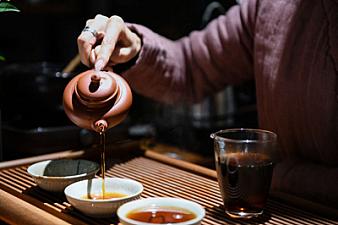
- Choose appropriate teaware: Yixing clay teapots are an ideal choice for appreciating Pu-erh tea, as they can fully release the aroma of the tea leaves.
- Control water temperature: The water temperature should not be too high, ideally between 95-100°C.
- Control the brewing time: Start with a shorter brewing time to allow the tea to slowly release its aroma.
- Taste widely: Try Pu-erh teas from different years and origins to experience the differences in their flavors.
- Be patient: The charm of Pu-erh tea lies in its lingering sweetness and complex flavor, which requires slow and careful appreciation to fully experience.
Conclusion: A gift from the mountains, a gift of time.
Pu'er tea is a gift from the Yunnan mountains and a present of time. It's not just a beverage, but a symbol of culture, an attitude towards life. It teaches us to cherish time, appreciate nature, and savor life. Next time you enjoy a cup of Pu'er tea, perhaps slow down and feel deeply its profound meaning, and you might gain some wisdom about life.