


Pu'er Fragrance: The breath of the mountains, a gift of time.
December 28, 2025






Deep within the mountains of Yunnan, Pu-erh tea is like a silent sage, quietly accumulating the power of time. It doesn't charm with vibrant appearances, but tells stories of mountains, time, and life through its deep fragrance and rich flavor. Join us as we explore the mysteries of Pu-erh tea and experience its unique charm.
Pu'er Fragrance: The breath of the mountains, a gift of time.
Pu'er Fragrance: The breath of the mountains, a gift of time.
I remember the first time I saw Pu'er tea, it was in a quaint and traditional teahouse. A white-haired tea connoisseur carefully pried open a brick of tea, releasing a cloud of steam and a fragrant aroma. He closed his eyes and took a deep breath, as if communicating with the tea. I curiously asked, "Why do you like Pu'er tea so much?" He slowly opened his eyes and smiled, saying, "Pu'er tea is the breath of the mountains, a gift of time."
Origin of Pu'er: From the ancient tea homeland.
Pu'er tea, as the name suggests, originates from the Pu'er region of Xishuangbanna and MengHai in Yunnan Province. As early as the Tang Dynasty, this area was a place of tea tree cultivation, but large-scale production and trade didn't truly develop until the Song Dynasty. At that time, the Tea Horse Road connected Central China with the southwestern frontier, and Pu'er tea, as an important commodity, was exported to Tibet, Western Regions, and even Southeast Asia. It was more than just a beverage; it was a bridge connecting different cultures and promoting exchange.
Raw vs. Ripe: Two completely different souls.
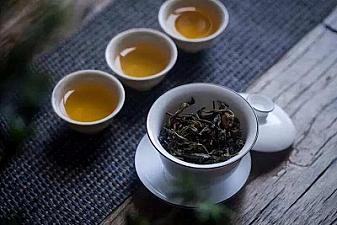
What makes Pu'er tea unique is that it has two completely different types: "raw tea" and "ripe tea." Raw tea, as the name suggests, is unfermented tea leaves, preserving the original flavor of the tea. It has a slightly astringent taste, a long-lasting aftertaste, and a unique "sheng jin" (freshness) sensation. Ripe tea, on the other hand, is based on raw tea, but undergoes fermentation, causing chemical changes in the tea's internal substances. It has a mellow and smooth taste, and a unique "shou xiang" (ripe aroma).
Raw Tea: The wildness and vitality of the wild.
Imagine standing on the edge of an ancient tea garden, feeling the first rays of morning sunlight on the tea leaves, and breathing in the air mixed with the scent of earth. Raw tea is like this tea garden itself, full of wildness and vitality. Its production process is relatively simple, mainly involving picking, withering, pan-firing, rolling, and drying. However, every step is crucial, directly impacting the quality and flavor of the tea. High-quality raw tea has a slightly astringent taste, a quick aftertaste, floral and fruity aromas, and leaves you feeling refreshed and comfortable after drinking.
Ripe Tea: The sedimentation of time and mellow richness.
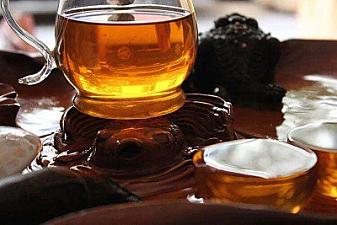
Unlike raw tea, the production of ripe tea is more complex, requiring processes such as piling and fermentation to allow microorganisms in the tea leaves to fully ferment. This process requires patience and experience, and different fermentation methods will affect the final flavor of the ripe tea. High-quality ripe tea is mellow and smooth when sipped, with a unique "aged fragrance," leaving a feeling of warmth and comfort after drinking, as if immersed in a mountain forest, experiencing nature's gifts. The special thing about ripe tea is that it has the characteristic of "the older the better," and its flavor will become richer and more complex with time.
Artisanship: The Story Behind a Cup of Tea
Whether it's raw tea or ripe tea, its quality depends on the hard work of tea makers. From picking to processing, every step embodies their dedication and wisdom. On the tea mountains of Yunnan, I once met an old tea farmer who told me, "Tea making is a science, it requires heartfelt understanding and experience to summarize." He told me that the picking time, wilting temperature, and firing process of the tea leaves all affect the quality of the tea. He also told me that tea making is not just a technique, but also a tradition, a respect for nature.
Tea Tasting Tips: A Beginner's Guide
For beginners, tasting Pu-erh tea may be a bit challenging. Here are some suggestions:
- Choose the right tea: Beginners can choose some ripe teas with a relatively mild taste, such as teas with a smooth taste and woody or honey aroma.
- Control the water temperature: The water temperature should not be too high, generally around 95-100°C.
- Pay attention to steeping time: The steeping time should not be too long, so as not to affect the taste.
- Savor carefully: Tea tasting is not just about drinking, but also an experience. You need to feel the aroma, taste, and rhyme of the tea with your heart.
- Try different varieties: Different origins, different years, and different processes will bring different flavors. Try different varieties to find the tea you like.
Pu-erh tea is the breath of the mountains, a gift of time. It's not just a beverage, but a culture, a lifestyle. We hope this article will help you better understand Pu-erh tea and begin your own tea-tasting journey.