
White hair, silver crown: a cup of white tea, the quiet murmur of time on the hillside.
December 28, 2025






Legend has it that during the Tang Dynasty, Master Bai was spared from harm thanks to white tea, marking the beginning of its legendary tale. It is unrolled and unshaped, naturally relaxed, like the most unassuming life in the mountains. Let us journey together into the misty forests of Fujian Province to explore this "unrolled and unshaped" white tea and experience the whispers of time and the gifts of the wilderness it holds.
White fuzz, silver crown: a cup of white tea, the whisper of time on the hillside.
White fuzz, silver crown: a cup of white, the low murmur of half a mountain's time.
I remember the first time I saw Fujian White Tea, it was in a simple and rustic tea house. Outside the window, a gentle rain was falling, and the room was filled with a faint, refreshing fragrance, as if I were deep in the mountains. The tea house owner, an elderly man with white hair, handed me a cup of tea and told me, “This is Zheng Shan Da Ming Gong, unrolled and unrubbed, naturally grown, a gift from the mountains.”
Legend has it that during the Tang Dynasty, Bai Gong was sentenced to death for an offense. He requested permission to gather some tea from Guanling to stave off hunger. After he brought back the tea, its bitter compounds dissolved in water, poisoning the officials who drank it and saving Bai Gong's life. This is the beginning of the legend of white tea and established its special place in Chinese culture.
Unstirred and unkneaded, a gift from nature.
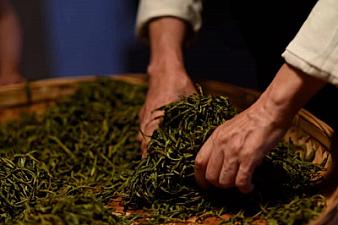
Unlike other teas, the production process of white tea is extremely simple. It undergoes only two stages: withering and sun-drying. This "no-rubbing" method preserves the most original form and flavor of the tea leaves. Zheng Shan Da Ming Gong is a premium grade of white tea. It grows in the Zheng Shan Jian area of Wuyi Mountain, Fujian Province, where the climate is humid, shrouded in clouds and mist, and the soil is fertile, making it ideal for tea cultivation.
Mount Zhengshan Da Ming Guan: The Spirit of Wuyi Mountain
The harvesting of Zhengshan Daming Crown tea is very strict, only occurring between the Clear and Grain Rain periods, which is during the spring. The standard for harvesting is "with stem and bud," meaning tea leaves are picked with both buds and stems. The harvested tea leaves are naturally withered in the sunlight and then spread out to dry, with no manual intervention throughout the entire process.
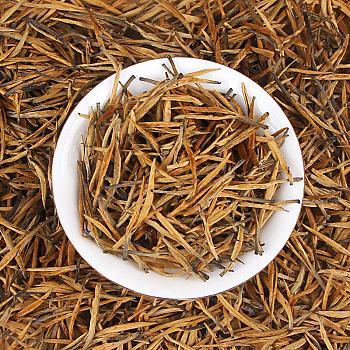
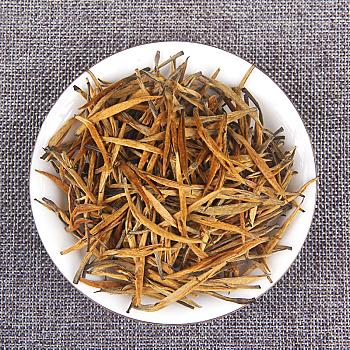
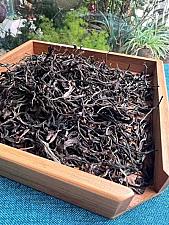
The characteristics of Zhengshan Da Ming Gongfu tea are "white tips exposed, covered in snow." The tea buds and stems are covered in a layer of white fuzz, like a silver coat, hence the name "white tips exposed." It has a plump and uniform appearance, a silvery-green color, a clear and mellow aroma, a sweet and refreshing taste, a bright apricot-yellow liquor, and vibrant tea leaves.
The settling of time, the transformation of flavor.
The charm of white tea lies not only in its fresh and crisp taste, but also in the subtle changes in its flavor over time.
The charm of aged fragrance.
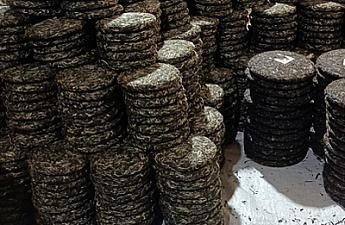
Aged white tea, which is white tea that has been stored for many years, develops a unique "aged fragrance." This aged fragrance is a scent similar to orchids, produced by the oxidation and esterification reactions of the tea's internal substances over a long period. Aged fragrance white tea has a richer taste, a persistent aftertaste, and a unique charm.
Storing white tea requires attention to some details. Choose a well-ventilated, dry, and light-free place, avoiding direct sunlight and humidity. The storage environment's temperature should be kept constant, avoiding drastic temperature changes.
The art of appreciating white tea.
Appreciating white tea is a form of enjoyment and a form of cultivation. It doesn't require complicated tea sets, just a simple tasting cup or gaiwan.
Tasting and Drinking Recommendations
- Water Temperature: The water temperature should not be too high, 80-85°C is sufficient.
- Tea Amount: The amount of tea can be adjusted according to personal taste, generally 3-5 grams is sufficient.
- Brewing Times: White tea can be brewed multiple times, and the brewing time for each time can be slightly extended.
- Taste tea: When tasting tea, you can first smell the fragrance, then observe the color, and then savor the flavor. Feel the layers and changes of the tea in your mouth.
Drinking white tea is a dialogue with nature and a resonance with time. It brings us a sense of tranquility and simplicity, and also a perception of life. Next time you taste a cup of white tea, try closing your eyes and feeling the mountain air and whispers of time it contains.
May you also find your own tranquility and wisdom in the clear fragrance of white tea.