
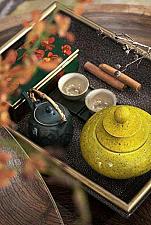

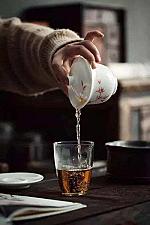
Longjing's Spring Whispers: A cup of tea, a trace of West Lake's charm.
December 28, 2025






Spring sunlight over West Lake, veiled in mist. A cup of Longjing tea, its fragrance intoxicating, seems to transport you to the poetic realm of Jiangnan. This article will explore the long history and exquisite craftsmanship of Longjing tea, savor its unique flavor, appreciate its cultural significance, and reveal the story behind a cup of Longjing.
Longjing's Spring Whispers: A cup of tea, a glimpse of West Lake's charm.
Longjing's Spring Whispers: A cup of tea, a glimpse of West Lake's charm.
I remember when I was a child, every spring my grandmother would take me to the West Lake. The shore of the West Lake was always filled with a fresh fragrance – the scent of Longjing tea. My grandmother would always say, "This tea is the soul of West Lake; one sip and you can feel the spring of West Lake." Now, many years have passed, and when I taste Longjing tea again, that memory and feeling remains vivid, even more profound.
The long history of Longjing tea
Longjing tea, originally named Lion's Head tea, gets its name from its appearance, which curls like a lion's head. A beautiful legend surrounds the origin of Longjing tea: During the Tang Dynasty, a tea sage named Lu Yu came to West Lake, praising its beautiful environment and proceeded to harvest tea there. During the Song Huizong period, an imperial chef accidentally discovered a high-quality tea tree in the area and transplanted it to the fertile soil of Longjing. The tea tree grew exceptionally well, and the resulting tea was fragrant and sweet, deeply loved by the emperor, who bestowed upon it the name "Longjing."
The cultivation history of Longjing tea can be traced back to the Southern Song Dynasty, but large-scale planting and production truly took shape during the Ming and Qing dynasties. After hundreds of years of development, Longjing tea has become a signature product of West Lake and is also one of China’s representative green teas.
Craftsmanship nurtures flavor.
The quality of Longjing tea largely depends on the harvesting time and the refinement of the craftsmanship. Authentic Longjing tea must be harvested as "Mingqian tea," which refers to tea picked within the first twenty days after the Spring Equinox. At this time, the tea contains a high water content, is rich in amino acids, and has the most subtle fragrance.
After harvesting, tea leaves undergo a series of complex processes including "kill-green," "rolling," and "spreading." "Kill-green" is a crucial step, as it needs to quickly remove enzymes from the tea leaves to prevent oxidation and maintain their green color. Rolling shapes the tea leaves, while spreading allows them to dry evenly and remove excess moisture.
Authentic West Lake Longjing tea features tightly rolled and elegant strips, a vibrant emerald green color, a clear and lasting fragrance, a fresh, mellow, and sweet taste, a bright emerald green liquor, and intact, whole leaves – all important indicators of quality.
Longjing and Pu'er: A Dialogue of Taste
If Longjing tea represents the freshness and vitality of the Jiangnan region, then Pu'er tea symbolizes the accumulation of time and depth. Placing the two together for comparison further highlights the diversity of Chinese tea. Longjing tea is known for its characteristic "refreshing and ethereal" flavor, while Pu'er tea is highly praised for its "becoming more fragrant with age and infinite transformation."
The aroma of Longjing tea is a blend of floral, fruity, and grassy notes, with a refreshing taste and rapid aftertaste. Pu'er tea, on the other hand, undergoes post-fermentation, resulting in a mellow taste and a unique aged aroma and honeyed sweetness. Longjing tea is a representative of spring tea, while Pu'er tea is suitable for drinking in winter, each representing different seasons and different cultures.
Drinking Longjing: Suggestions for Beginners
For beginners, there are some points to note when drinking Longjing tea:
- Water Temperature: Longjing tea is best brewed with water between 80-85°C. Water that is too hot will destroy the vitamins and amino acids in the tea leaves, affecting the taste and aroma.
- Tea Quantity: Generally, about 5 grams of tea per person is sufficient.
- Brewing Times: Longjing tea can be brewed multiple times, and the brewing time can be slightly extended each time to fully release the tea's aroma and flavor.
- Drinking Method: When drinking Longjing tea, you can first smell its aroma, then taste its flavor, and feel the changes of the tea in your mouth.
Conclusion
A cup of Longjing tea is more than just a beverage; it's a journey of tasting the spring flavors of West Lake, a cultural inheritance and a refined taste. It carries the memories of history and embodies a reverence for nature. I hope you can also experience that unique charm and sentiment while enjoying Longjing tea.